Ethereum – The Future of Decentralized Finance and Smart Contracts
Apr 20, 2026

If Bitcoin is considered "digital gold"—a secure, finite store of value—then Ethereum (ETH) is the world's decentralized supercomputer.
As the second-largest cryptocurrency by market capitalization, Ethereum does far more than just transfer value from person to person. It is a massive, global software platform that forms the absolute backbone of modern Web3, decentralized finance (DeFi), and digital ownership.
Whether you are looking to diversify your crypto portfolio or want to understand how the future of the internet is being built, mastering Ethereum is essential. Let’s break it down.
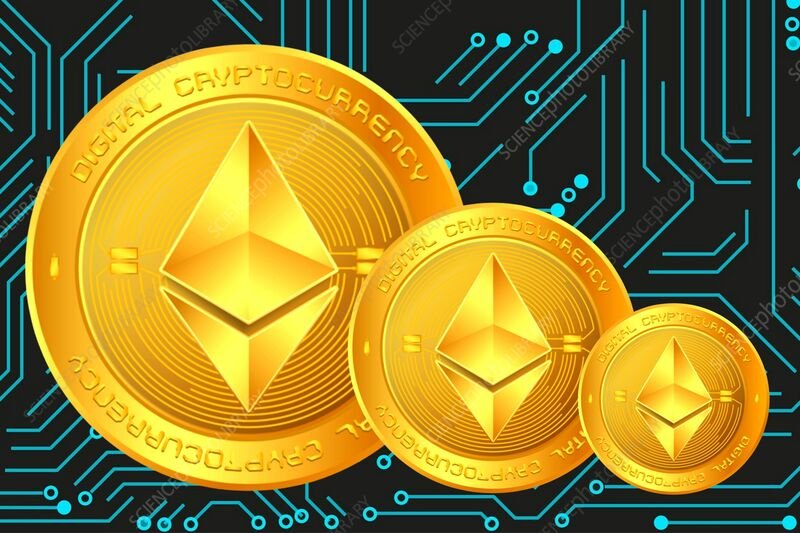
Suggested Image Alt Text (SEO): Ethereum ETH cryptocurrency diamond logo glowing on a futuristic digital background
Launched in 2015 by a young programmer named Vitalik Buterin, Ethereum took the underlying blockchain technology popularized by Bitcoin and expanded it exponentially.
While Bitcoin’s blockchain was designed strictly to track the ownership of a digital currency, Buterin realized that a blockchain could track any digital agreement. To do this, Ethereum introduced two revolutionary components:
Smart Contracts: These are self-executing contracts with the terms of the agreement directly written into lines of code. They automatically execute when specific conditions are met, completely eliminating the need for middlemen like lawyers, brokers, or banks.
The Ethereum Virtual Machine (EVM): This is the global, decentralized computer engine that executes those smart contracts, powered by thousands of independent nodes running worldwide.
Because anyone can write a smart contract and deploy it to the EVM, Ethereum became the birthplace of Decentralized Applications (dApps), NFTs (Non-Fungible Tokens), and Stablecoins.
Initially, Ethereum used the same energy-heavy "Proof of Work" mining system as Bitcoin. However, in a historic technical upgrade known as The Merge, Ethereum completely transitioned to a Proof of Stake (PoS) consensus mechanism.
Instead of computers competing to solve complex math puzzles using massive amounts of electricity, the network is secured by Validators.
To become a validator, participants must lock up, or "stake," 32 ETH as collateral.
Validators are randomly selected to propose new blocks of transactions and verify others.
If a validator behaves honestly and keeps their computer online, they earn rewards (similar to earning interest).
If a validator tries to cheat or attack the network, a portion of their staked ETH is permanently destroyed—a process called slashing.
This shift reduced Ethereum’s energy consumption by over 99.9% and established it as one of the most cryptoeconomically secure networks in existence, with over 30% of its entire supply actively staked by investors to protect the ecosystem.
Suggested Image Alt Text: Smartphone screen displaying decentralized finance DeFi applications and Ethereum wallet transactions
While they are the two undisputed titans of the crypto space, they serve completely different purposes:
| Feature | Bitcoin (BTC) | Ethereum (ETH) |
|---|---|---|
| Primary Purpose | Digital Currency / Store of Value | Smart Contract Platform / Decentralized Apps |
| Consensus Mechanism | Proof of Work (Mining) | Proof of Stake (Staking) |
| Transaction Types | Financial transfers only | Complex programmatic data and applications |
| Supply Cap | Hard cap of 21 million | Dynamic supply (adjusts based on network use and fee burning) |
Every time you interact with the Ethereum network—whether you are sending ETH to a friend, minting an NFT, or swapping tokens on a DeFi platform—it requires computational power.
To pay the validators for this work, users must pay a fee known as Gas, which is priced in fractional amounts of ETH called Gwei.
When the network is incredibly busy (e.g., during a major market event or a popular NFT launch), gas fees can spike significantly. To combat this, the Ethereum ecosystem heavily relies on Layer 2 (L2) Scaling Solutions (like Arbitrum, Optimism, and Base). These are secondary networks built on top of Ethereum that handle thousands of transactions cheaply and quickly before settling the final data securely back onto the main Ethereum blockchain.
If Bitcoin represents a revolution in how we view money, Ethereum represents a revolution in how we build global infrastructure. By decentralizing code, finance, and digital ownership, Ethereum isn't just a cryptocurrency—it is the foundational settlement layer for a brand-new internet economy.