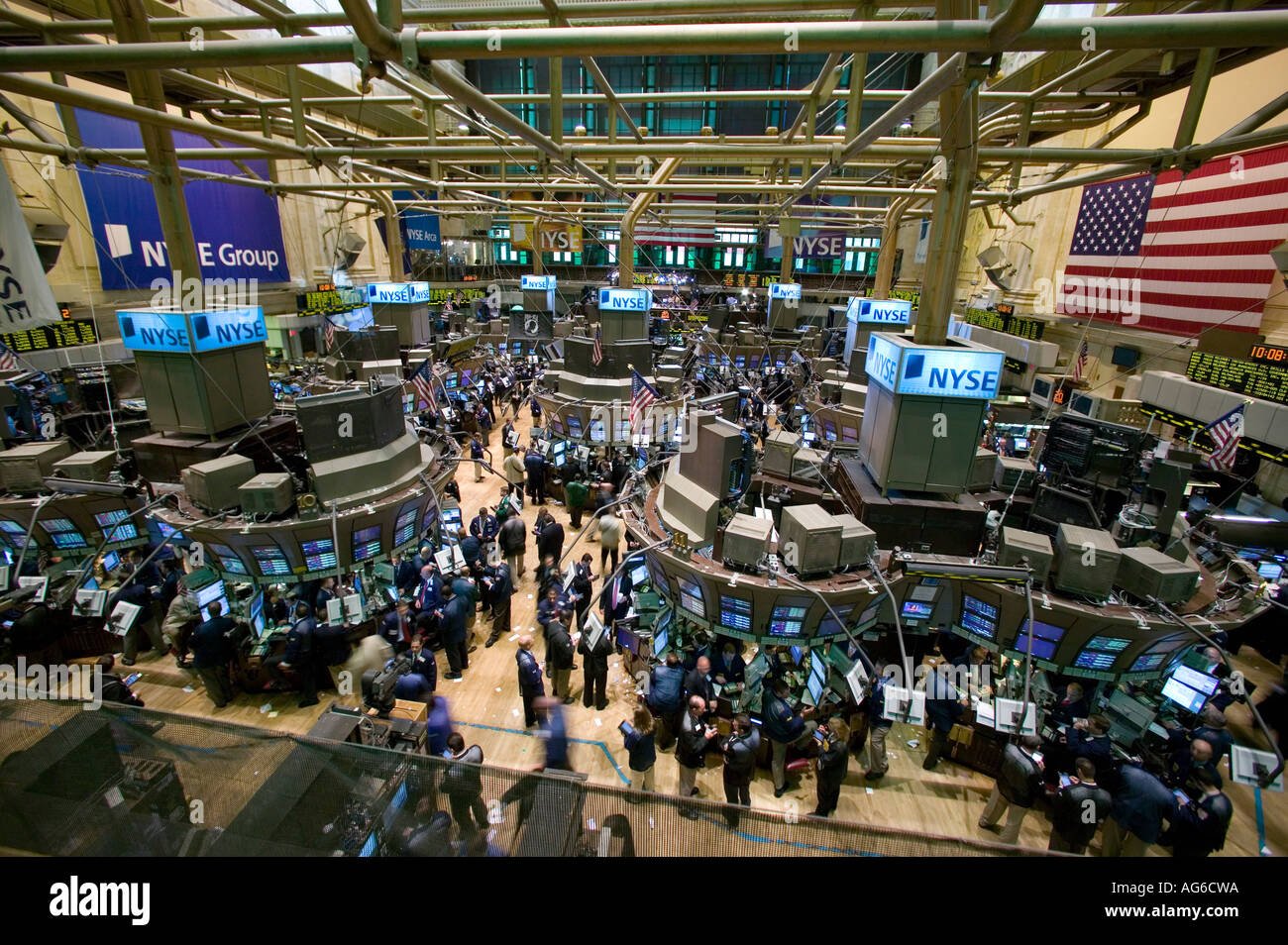
NYSE Faces Volatility as Markets React to Economic Signals!
Apr 19, 2026

As we clear the first half of 2026, the New York Stock Exchange (NYSE) and broader U.S. equity markets continue to defy traditional market gravity. Driven by an unprecedented surge in corporate earnings, massive artificial intelligence (AI) capital infrastructure deployment, and supportive fiscal measures, the historic bull run remains intact.
However, beneath the surface of record-breaking index highs, a unique set of market dynamics is forming. For investors looking to optimize their portfolios, understanding the balance between high valuations and strong earnings growth is critical. Here is what is driving the NYSE right now.
A common concern among conservative investors is the current price-to-earnings (P/E) multiple, which is trading close to 21 times forward earnings—historically sitting higher than roughly 87% of the data over the last 40 years.
While that might scream "overvalued" on paper, major institutional strategists argue these valuations are actually fair. Why? Because corporate profits are near record highs. In the first quarter of 2026, the median S&P 500 company delivered an impressive 6% earnings surprise—the strongest showing in four years. With 12% earnings-per-share (EPS) growth projected through the rest of the year, corporate fundamentals are actively justifying stock prices.
The AI boom has transitioned from a speculative software narrative into a massive capital expenditure (CapEx) reality.
The Scale of Spending: The largest cloud computing infrastructure giants (hyperscalers) are on track to spend an estimated $670 billion to $800 billion in 2026 alone.
The Impact on the Market: This infrastructure buildout—focused on data centers, advanced chips, physical power grids, and network systems—is expected to drive approximately 40% of all S&P 500 EPS growth this year.
The Investor Takeaway: While mega-cap tech stocks have carried the heavy lifting, performance is beginning to broaden out. Savory opportunities are emerging in cyclical sectors that support this growth, particularly power infrastructure and commodities.
Geopolitical instabilities, like ongoing energy disruptions affecting Europe, leave the U.S. market in a uniquely advantageous position. Because the U.S. remains a resilient net exporter of petroleum products, its domestic economy is relatively insulated from severe external energy shocks. Coupled with expected rate cuts from the Federal Reserve and corporate tax relief tailwinds carried over from the "One Big Beautiful Act," NYSE-listed equities are heavily favored by global capital over European and emerging market peers.
Focus on Secular Growth: Look past short-term market noise and target companies tied to unavoidable long-term structural trends, particularly those facilitating AI data infrastructure and domestic manufacturing.
Expect Sector Rotations: Market breadth has been historically narrow, meaning a tiny cluster of tech giants has dominated the gains. Anticipate sudden "catch-up" rotations into lagging, high-quality defensive and value sectors as the year progresses.
The phrase for the remainder of 2026 isn't market uncertainty, but rather market instability—meaning rapid, shifting rotations across sectors. While the macro path might be choppy due to sticky inflation hovering near 3%, corporate profitability and the massive AI tech cycle provide a very sturdy floor for long-term investors. Stay diversified, keep an eye on capital expenditure trends, and use temporary dips to accumulate quality.
NYSE trading floor stock market trends and AI infrastructure investment growth 2026