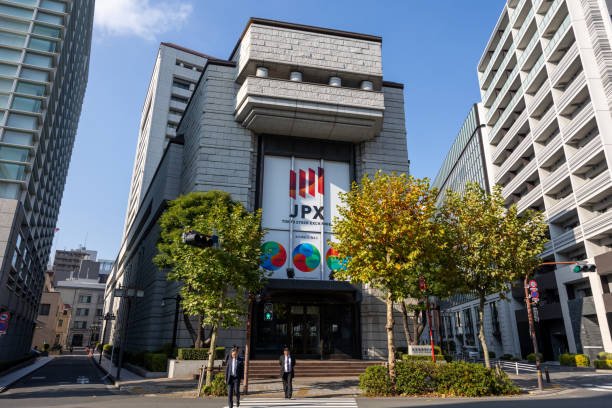
Tokyo Stock Exchange Sees Cautious Trading Amid Global Uncertainty
Apr 19, 2026
As the financial beating heart of Asia, the Tokyo Stock Exchange (TSE)—widely referred to as Tōshō in Japan—is one of the most vital stock exchanges on the planet. Home to global industrial pioneers, automotive titans, and tech giants, the TSE offers a gateway into the world’s third-largest national economy.
If you are looking to expand your portfolio beyond Western markets, a deep dive into the Tokyo Stock Exchange is essential.
Operated by the Japan Exchange Group (JPX), the TSE underwent a historic structural overhaul to simplify its framework, boost liquidity, and enforce stricter corporate governance.
Instead of its legacy "Sections," the exchange is divided into three distinct, highly regulated market segments:
Prime Market: Designed for the exchange's largest, blue-chip global companies. These corporations must maintain an exceptionally high market capitalization and meet rigid board independence and climate disclosure standards.
Standard Market: Tailored for fundamental, mid-sized companies that have a solid track record of financial health and standard market liquidity.
Growth Market: A high-risk, high-reward segment built specifically for emerging startup businesses and innovative companies displaying high growth potential.
To keep your finger on the pulse of the Japanese market, you need to track its two primary benchmark indices:
Nikkei 225: Japan’s premier stock index. It is a price-weighted index tracking 225 of the top blue-chip Japanese equities listed on the TSE, including global household names like Sony, Toyota, and Nintendo.
TOPIX (Tokyo Stock Price Index): A broader, market-capitalization-weighted index tracking a massive pool of companies on the exchange. It provides a more comprehensive health check of the overall Japanese macroeconomy.
Quick Investor Tip: The TSE operates in Japanese Yen (JPY), meaning your investments are exposed to currency fluctuations. Additionally, keep an eye on Japanese corporate governance initiatives—the TSE has been aggressively pushing listed firms to boost capital efficiency and improve shareholder returns, sparking a massive wave of global investor interest.
Tapping into Tokyo's booming market doesn't require moving across the globe. You can gain exposure through a few simple avenues:
International Brokers: Verify whether your domestic brokerage account offers global trading permissions. Platforms like Interactive Brokers provide direct access to execute trades on the physical TSE floor during Tokyo trading hours.
ADRs (American Depositary Receipts): Many prominent TSE giants list ADRs on U.S. stock exchanges (like the NYSE or NASDAQ), enabling you to purchase shares in USD during Western market hours.
Japan-Focused ETFs: If you prefer instant diversification over single-stock picking, look for popular Exchange-Traded Funds (ETFs) that passively replicate the Nikkei 225 or the broader TOPIX index.
The Tokyo Stock Exchange provides a uniquely stable yet forward-looking environment to build international wealth. Sayōnara to a single-market portfolio!