Tokyo Stock Exchange Sees Cautious Trading Amid Global Uncertainty
Apr 19, 2026
When investors look for powerhouse markets outside of Western economies, their eyes almost always land on Japan. At the center of this economic engine is the Tokyo Stock Exchange (TSE), known locally as Tōshō.
As the largest stock exchange in Asia and one of the largest in the entire world, the TSE is home to legendary global innovators like Toyota, Sony, and Nintendo. If you are looking to truly globalize your investment portfolio, understanding the TSE is an absolute must.
Suggested Image Alt Text (SEO): Tokyo Stock Exchange TSE interior electronic ticker board showing Japanese stock prices
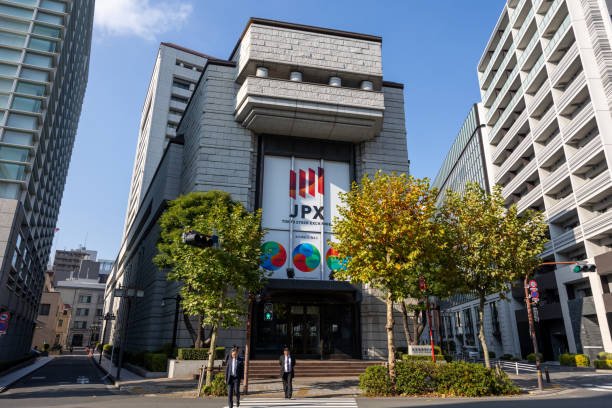
Founded in 1878, the Tokyo Stock Exchange is the crown jewel of Japan's financial sector. It is operated by Japan Exchange Group (JPX), a corporate entity formed by the merger of the TSE and the Osaka Securities Exchange.
For decades, the TSE operated under a complex market structure that confused international investors. However, a major market restructuring streamlined the exchange into three clean, distinct market segments based on company size and governance:
Prime Market: The premier tier for large, blue-chip companies with high liquidity and a strong global focus.
Standard Market: Designed for mid-sized companies that meet solid, fundamental financial and governance standards.
Growth Market: Geared toward high-potential startup companies looking to raise capital, despite carrying higher investment risk.
While the mechanics of buying and selling shares are universally similar, the TSE has a few unique quirks that Western investors need to be aware of:
Trading Hours and the Lunch Break: Unlike Western markets that trade continuously, the TSE takes a literal lunch break. The morning session runs from 9:00 AM to 11:30 AM JST, and after a one-hour pause, the afternoon session runs from 12:30 PM to 3:30 PM JST.
The "Unit" Rule: On the TSE, you typically cannot buy just a single share of a company. Most stocks are traded in standard "units" of 100 shares. This means if a stock is trading at ¥5,000 per share, the minimum initial investment to buy a unit is ¥500,000.
Suggested Image Alt Text: Tokyo financial district Nihonbashi area near the Japan stock exchange
To track how the broader Japanese economy and the TSE are performing, investors look to two major benchmark indices:
| Index | Type | What It Tracks |
|---|---|---|
| Nikkei 225 | Price-Weighted | The 225 top-rated Japanese companies listed on the Prime Market. (Often called the "Dow Jones of Japan"). |
| TOPIX (Tokyo Stock Price Index) | Market Cap-Weighted | A much broader index that tracks all companies listed in the Prime Market, offering a more accurate reflection of Japan's overall economy. |
Investing in Japan offers an excellent counterbalance to U.S. and European assets. Japanese corporations are renowned for their massive cash reserves, technological dominance, and robust corporate governance standards.
Furthermore, because many TSE-listed companies are heavy exporters (selling cars, electronics, and machinery globally), investing in the TSE gives you a stake in global consumer demand, wrapped in the stability of one of the world's most legally secure and advanced economies.