SSE Sees Cautious Trading as Investors Monitor China’s Economic Outlook
Apr 19, 2026
When discussing the heavyweights of global finance, Western markets like the NYSE and NASDAQ dominate the conversation. However, the true epicenter of economic growth in the East lies within the Shanghai Stock Exchange (SSE).
As the largest stock exchange in mainland China and one of the largest in the world, the SSE offers a direct window into the world’s second-largest economy. For global investors looking to understand Eastern capital, mastering the basics of the SSE is vital.
Suggested Image Alt Text (SEO): Shanghai financial district Pudong Lujiazui skyline at night near the stock exchange
Founded in its modern iteration in 1990, the SSE is a non-profit organization directly governed by the China Securities Regulatory Commission (CSRC). It serves as the primary listing venue for China's massive state-owned enterprises, heavy industrials, and booming tech giants.
Unlike Western exchanges, the SSE is unique because it operates two completely different classes of shares for listed companies, categorized by who is allowed to buy them:
A-Shares: Priced in local Chinese Yuan (RMB). Historically, these were only available to domestic Chinese investors, though international access has opened up significantly through specific regulatory channels.
B-Shares: Priced in foreign currencies (specifically US Dollars on the SSE). These were originally designed for foreign investors, though domestic investors with foreign currency accounts can now trade them as well.
The SSE is split into two primary trading platforms, each serving a different type of corporation:
This is the traditional home of China’s economic backbone. It hosts large, mature, and highly profitable blue-chip companies, many of which are state-owned enterprises in banking, energy, and infrastructure (like Kweichow Moutai or the Industrial and Commercial Bank of China).
Launched in 2019, the STAR Market is often called "China’s NASDAQ." It is designed specifically for early-stage, high-growth technology and science companies (such as chipmakers, biotech firms, and green energy innovators). The STAR Market features more relaxed listing requirements but carries higher volatility.
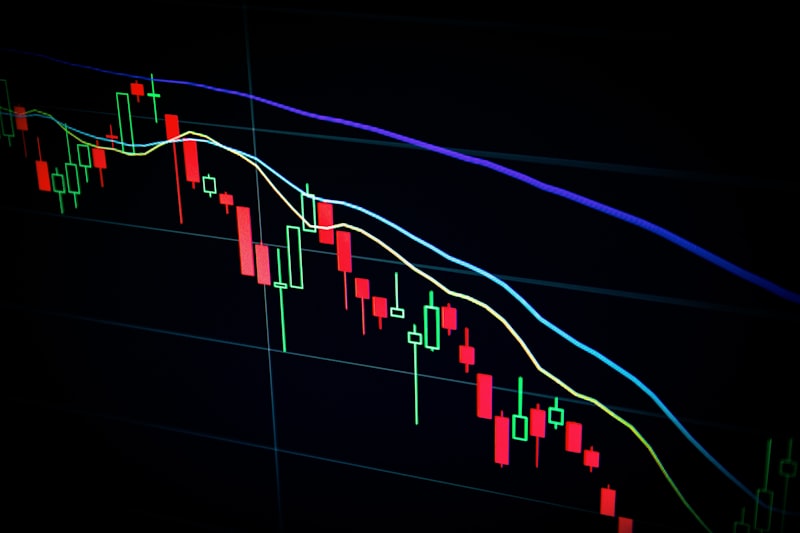
Suggested Image Alt Text: Financial market stock charts showing trading data and candlestick graphs
Fun Fact: In Chinese stock markets, Red signifies a price increase, while Green signifies a price drop—the exact opposite of Western markets!
To take the pulse of the Shanghai market, global economists and investors monitor two benchmark indices:
| Index | What It Tracks | Why It Matters |
|---|---|---|
| SSE Composite Index | All stocks (both A and B shares) listed on the Shanghai Stock Exchange. | It is the most widely cited indicator of mainland China's overall market performance. |
| SSE 50 Index | The top 50 largest, most liquid blue-chip companies on the Main Board. | Represents the "cream of the crop" of Chinese corporate power and financial stability. |
For decades, the SSE was a closed ecosystem. Today, international retail investors can access the SSE primarily through the Shanghai-Hong Kong Stock Connect program. This regulatory bridge allows foreign investors with international brokerage accounts in Hong Kong to seamlessly buy and sell eligible Shanghai A-shares.
Investing in the SSE offers unparalleled exposure to China's domestic consumer market and its rapidly expanding tech sector. However, because the market is heavily influenced by domestic retail investor sentiment and government policy, it can experience unique volatility compared to Western exchanges.