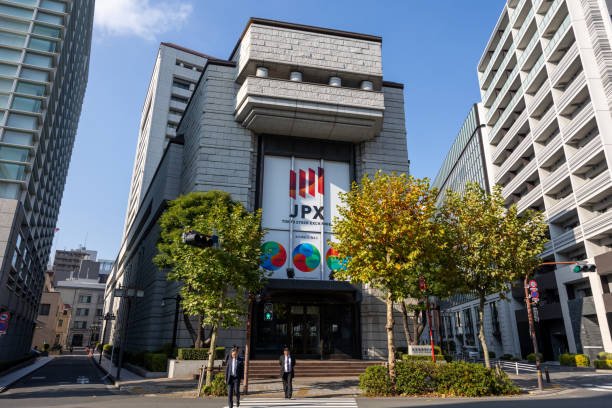
Tokyo Stock Exchange Sees Cautious Trading Amid Global Uncertainty
Apr 19, 2026
The Tokyo Stock Exchange, commonly called the TSE, is the largest stock exchange in Japan and one of the most important financial markets in the world. Located in Tokyo, the exchange serves as the center of Japanese finance and plays a major role in global investing.
Home to many internationally recognized corporations, the TSE connects businesses, governments, and investors through one of the world’s most advanced trading systems. From automobile giants to cutting-edge technology firms, Japan’s biggest companies rely on the TSE for growth, capital, and international visibility.
The exchange has become a symbol of Japan’s economic strength, innovation, and global business leadership.
The Tokyo Stock Exchange was established in 1878 during Japan’s modernization period known as the Meiji Era.
As Japan industrialized rapidly, the country needed a formal marketplace where companies and investors could trade securities efficiently. The TSE helped finance the growth of industries such as railways, manufacturing, banking, and shipping.
Over time, Japan became one of the world’s largest economies, and the Tokyo Stock Exchange expanded into a global financial powerhouse.
Despite periods of economic turbulence, including World War II and Japan’s asset bubble collapse in the 1990s, the TSE remained central to the country’s financial system.
The TSE is essential to Japan’s economy because it allows companies to raise money from public investors. Businesses can use this capital for:
Expansion
Research and development
Technology innovation
International growth
Hiring and production
For investors, the exchange offers access to some of the world’s most respected corporations across industries like:
Technology
Automotive manufacturing
Robotics
Electronics
Banking
Pharmaceuticals
Because Japan is one of the largest economies globally, movements in the TSE often influence international markets.
Many globally recognized Japanese corporations are listed on the Tokyo Stock Exchange.
Major examples include:
Toyota
Sony
Nintendo
Honda
SoftBank Group
These companies attract billions of dollars from both domestic and international investors.
The Tokyo Stock Exchange uses sophisticated electronic trading systems that process enormous numbers of transactions every second.
Its operations include:
Stock trading
Exchange-traded funds (ETFs)
Real estate investment trusts (REITs)
Bonds
Derivatives
Trading occurs electronically through advanced market infrastructure that ensures speed, transparency, and efficiency.
The TSE is operated by the Japan Exchange Group, which also manages other financial markets in Japan.
The TSE organizes companies into different market segments based on size, liquidity, and governance standards.
These sections help investors evaluate businesses more effectively.
Important market categories include:
Large, established corporations with strong governance and liquidity.
Mid-sized companies with stable business operations.
Emerging and high-growth companies, including startups and innovative businesses.
This structure encourages transparency while supporting companies at different stages of development.
Japan is famous for technological innovation, and the TSE reflects that reputation through advanced digital systems and market infrastructure.
The exchange uses:
High-speed electronic trading
AI-powered analytics
Real-time market monitoring
Automated risk controls
Cybersecurity systems
These technologies help maintain stable and efficient trading environments for global investors.
Japan’s expertise in robotics, semiconductors, and artificial intelligence also attracts technology-focused investment into TSE-listed companies.
One of the most closely watched market indexes linked to the TSE is the Nikkei 225.
The Nikkei 225 tracks major Japanese companies and is often compared to the Dow Jones Industrial Average in the United States.
When the Nikkei rises or falls sharply, global financial markets pay close attention because it reflects investor sentiment about Japan’s economy and international trade conditions.
Like all major financial markets, the Tokyo Stock Exchange faces several challenges.
These include:
Economic slowdowns
Aging population concerns in Japan
Currency fluctuations involving the yen
Global trade tensions
Competition from other international exchanges
However, Japan’s strong industrial base and technological leadership continue supporting the exchange’s long-term importance.
The future of the TSE is closely connected to technological growth and global investment trends.
Key developments may include:
Increased AI-driven trading
Expansion of green finance
Blockchain-based settlement systems
Greater international investor participation
Growth in semiconductor and robotics industries
Japan’s focus on innovation could help the TSE remain one of the world’s leading financial centers for decades to come.
The Tokyo Stock Exchange stands as one of the most influential financial institutions in Asia and the world. From powering Japan’s industrial rise to supporting modern technology giants, the exchange has played a major role in shaping global finance.
With advanced trading systems, globally respected companies, and deep international influence, the TSE remains a critical hub for investors seeking opportunities in one of the world’s most innovative economies.
As global markets continue evolving, the Tokyo Stock Exchange is expected to remain at the forefront of international investing and economic growth.