Gold Prices Surge Amid Global Uncertainty as Investors Rush Toward Safe-Haven Assets in 2026 Market Rally
Apr 20, 2026
Gold is once again in the spotlight as global markets react to inflation fears, geopolitical tensions, and shifting interest rate expectations.
Gold prices have been highly volatile but overall strong in 2026, staying near record levels.
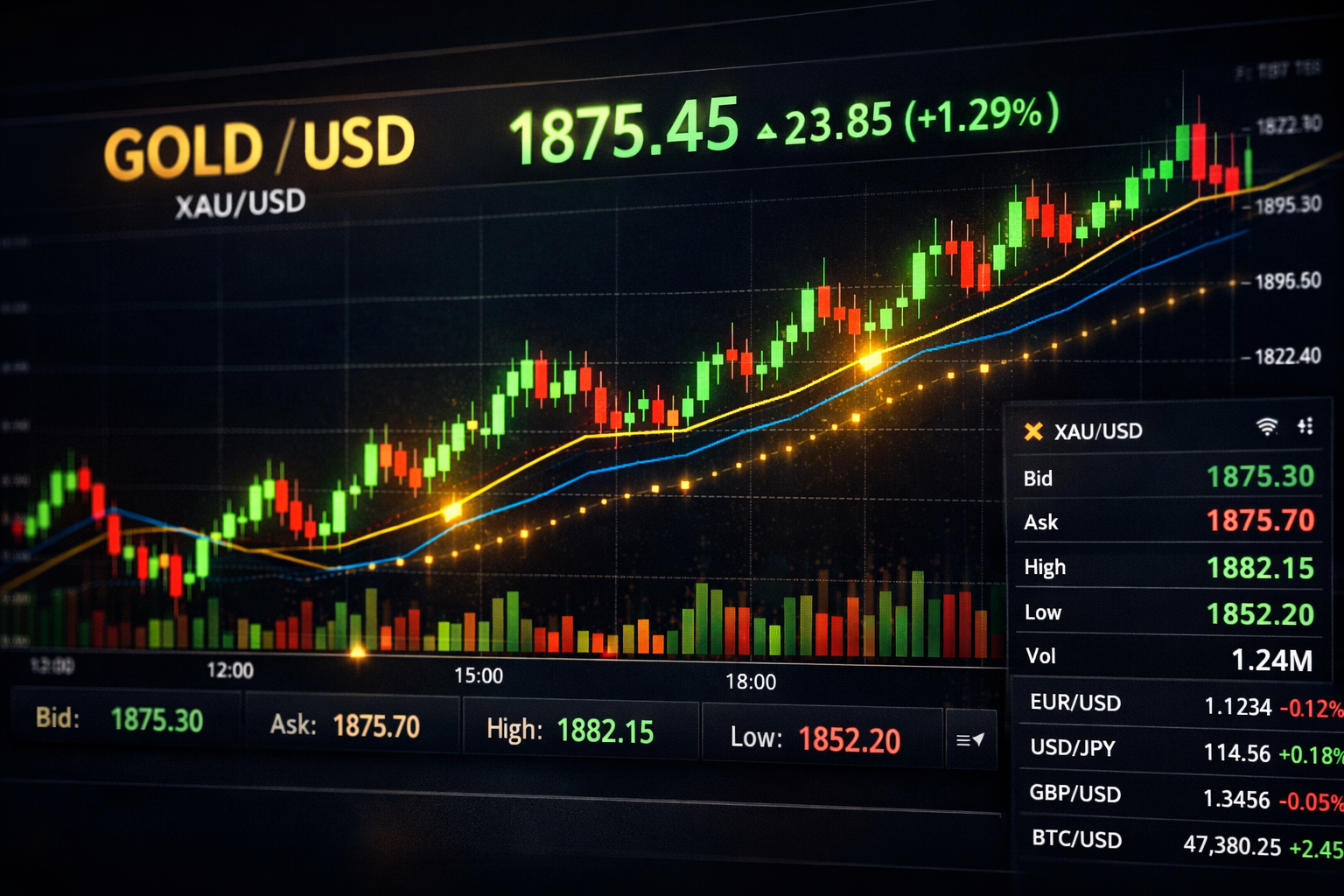
International gold recently traded around $4,700+ per ounce (Trading Economics)
In Pakistan, prices remain around Rs. 490,000+ per tola with daily fluctuations (Daily Pakistan English News)
Despite short-term dips, gold is still up significantly year-on-year, showing strong long-term demand.
Gold recently bounced back after a correction phase and is showing renewed strength due to safe-haven demand. (Reuters)
Rising global tensions (especially in the Middle East) are pushing investors toward gold as a safe-haven asset, increasing demand. (The Guardian)
Countries like China continue adding gold reserves, supporting long-term price stability and demand. (MarketWatch)
Analysts say gold may rise further, but needs stronger economic triggers to break into a new sustained rally. (Reuters)
Higher gold prices are boosting mining profits globally, with companies reporting strong earnings and cash flows. (Wall Street Journal)
Gold prices are mainly driven by:
💸 Inflation fears
🏦 Interest rate expectations
🌍 Political instability
💵 US dollar strength
🏛️ Central bank buying
Gold\ Price = f(Inflation,\ Interest\ Rates,\ Geopolitical\ Risk,\ USD\ Strength,\ Demand)
Gold is not stable in the short term
It is mainly used as:
Inflation hedge
Crisis protection asset
Long-term store of value
It does not generate income (no dividends)
Gold in 2026 is acting like a global safety asset again, with strong demand from central banks and investors worried about economic uncertainty.
It may not move in a straight line, but its long-term role in portfolios remains strong.