Euronext Markets Show Mixed Performance Amid Economic Uncertainty
Apr 19, 2026
.jfif)
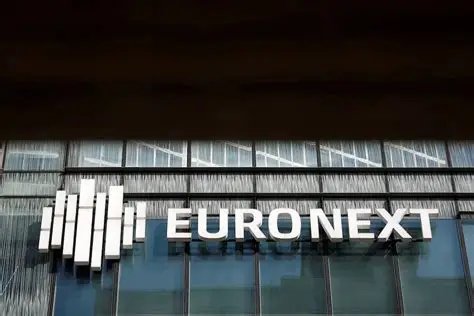
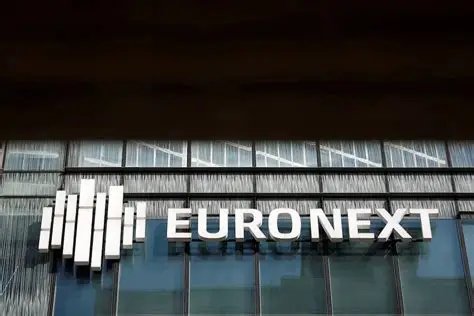
The Euronext is Europe's largest stock exchange group, connecting investors and companies across multiple countries. Operating major markets in cities such as Amsterdam, Paris, Brussels, Dublin, Milan, and Oslo, Euronext plays a critical role in Europe's financial ecosystem.
Euronext was established in 2000 through the merger of several European stock exchanges. Its mission is to create a unified marketplace that facilitates efficient trading, capital raising, and investment opportunities across Europe.
Today, thousands of companies are listed on Euronext, ranging from innovative startups to multinational corporations.
Euronext offers several advantages:
Access to a broad European investor base.
Cross-border investment opportunities.
High liquidity and transparency.
Advanced electronic trading technology.
Support for sustainable finance initiatives.
As a result, Euronext has become one of the most influential financial market operators globally.
Some well-known companies trading on Euronext include:
L'Oréal
Airbus
TotalEnergies
ASML
Danone
These firms represent sectors such as technology, energy, consumer goods, healthcare, and industrial manufacturing.
Euronext operates across various financial markets:
Investors can trade shares of publicly listed European companies.
Exchange-traded funds provide diversified exposure to sectors, countries, and investment themes.
Governments and corporations use Euronext markets to raise debt capital.
Futures and options help investors manage risk and speculate on market movements.
Several themes are shaping European markets:
Growth in artificial intelligence investments.
Increased demand for ESG-focused assets.
Expansion of green bonds and sustainable finance.
Rising interest in technology and semiconductor companies.
Greater cross-border investment activity.
Investing through Euronext can provide:
Geographic diversification.
Exposure to Europe's largest companies.
Access to multiple industries.
Strong regulatory oversight.
Long-term growth potential.
Despite its strengths, Euronext faces challenges:
Economic uncertainty.
Inflation pressures.
Interest-rate fluctuations.
Geopolitical risks.
Competition from global exchanges.
As European economies continue adapting to technological innovation and sustainability goals, Euronext is expected to remain a major destination for investors seeking exposure to the region's growth opportunities.
Its integrated marketplace, broad range of products, and international reach position it as a cornerstone of the European financial system.
Euronext stands as Europe's premier stock exchange network, connecting companies and investors across multiple countries. Its continued focus on innovation, sustainability, and market efficiency makes it a key player in global finance.