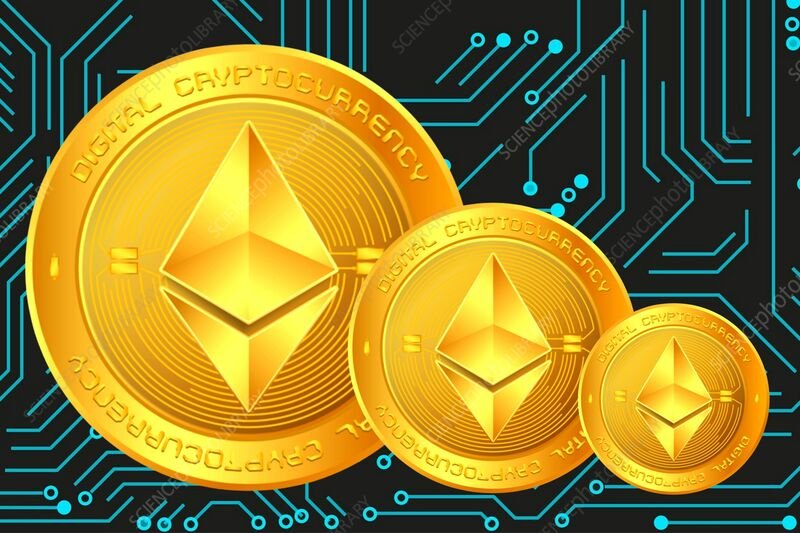
Ethereum – The Future of Decentralized Finance and Smart Contracts
Apr 20, 2026

Ethereum is one of the world’s most important blockchain platforms and the second-largest cryptocurrency ecosystem after Bitcoin. Created in 2015 by Vitalik Buterin and other developers, Ethereum expanded blockchain technology beyond digital money by introducing smart contracts and decentralized applications (dApps).
Its native cryptocurrency, Ether (ETH), powers transactions and applications across the Ethereum network.
Ethereum was proposed in 2013 by Vitalik Buterin, who believed blockchain technology could support far more than simple financial transactions.
The Ethereum network officially launched in 2015 and quickly became popular among developers because it allowed programmable applications to run without centralized control.
Over the years, Ethereum became the backbone for innovations such as decentralized finance (DeFi), NFTs, blockchain gaming, and Web3 applications.
Ethereum operates on blockchain technology similar to Bitcoin, but with additional capabilities.
Key features include:
Smart contracts
Decentralized applications (dApps)
Peer-to-peer transactions
Programmable blockchain network
Native cryptocurrency called Ether (ETH)
Smart contracts are self-executing agreements that automatically run when certain conditions are met.
Smart contracts are one of Ethereum’s biggest innovations. These digital contracts eliminate the need for intermediaries in many situations.
Examples of Ethereum-based applications include:
Decentralized finance platforms
NFT marketplaces
Blockchain games
Digital identity systems
Supply chain tracking
This flexibility made Ethereum the leading platform for blockchain development.
Ethereum originally used a mining system similar to Bitcoin called Proof of Work. However, the network later transitioned to Proof of Stake through an upgrade known as “The Merge.”
This change significantly reduced energy consumption and improved scalability while allowing users to help secure the network through staking.
Ethereum is important because it:
Powers decentralized finance (DeFi)
Supports NFTs and digital ownership
Enables blockchain innovation
Encourages Web3 development
Expands programmable finance
Many blockchain projects and cryptocurrencies are built on Ethereum’s infrastructure.
| Feature | Ethereum | Bitcoin |
|---|---|---|
| Main Purpose | Smart contracts and apps | Digital currency |
| Native Coin | Ether (ETH) | Bitcoin (BTC) |
| Supply | Flexible | Limited to 21 million |
| Technology | Programmable blockchain | Payment-focused blockchain |
| Energy Usage | Lower after Proof of Stake | Higher mining consumption |
While Bitcoin focuses mainly on digital money, Ethereum focuses on decentralized applications and blockchain functionality.
Investing in Ethereum carries risks such as:
Cryptocurrency market volatility
Regulatory uncertainty
Smart contract vulnerabilities
Competition from other blockchains
Cybersecurity risks
Despite these challenges, Ethereum remains one of the most widely used blockchain networks.
The future of Ethereum is expected to focus on scalability, lower transaction costs, and broader adoption of decentralized technologies.
Developers continue working on upgrades that improve speed and efficiency while supporting the growth of Web3, digital finance, and blockchain-based services.
As decentralized technologies evolve, Ethereum is likely to remain a major force in the future internet economy.
Ethereum transformed blockchain technology by introducing smart contracts and decentralized applications. From powering DeFi and NFTs to supporting the growth of Web3, Ethereum has become one of the most influential platforms in modern technology and finance.
For investors, developers, and technology enthusiasts, understanding Ethereum provides insight into the rapidly evolving world of blockchain innovation and digital finance.