Decentralized Finance (DeFi) – Transforming Traditional Banking Through Blockchain and Smart Contract Technology
Apr 20, 2026
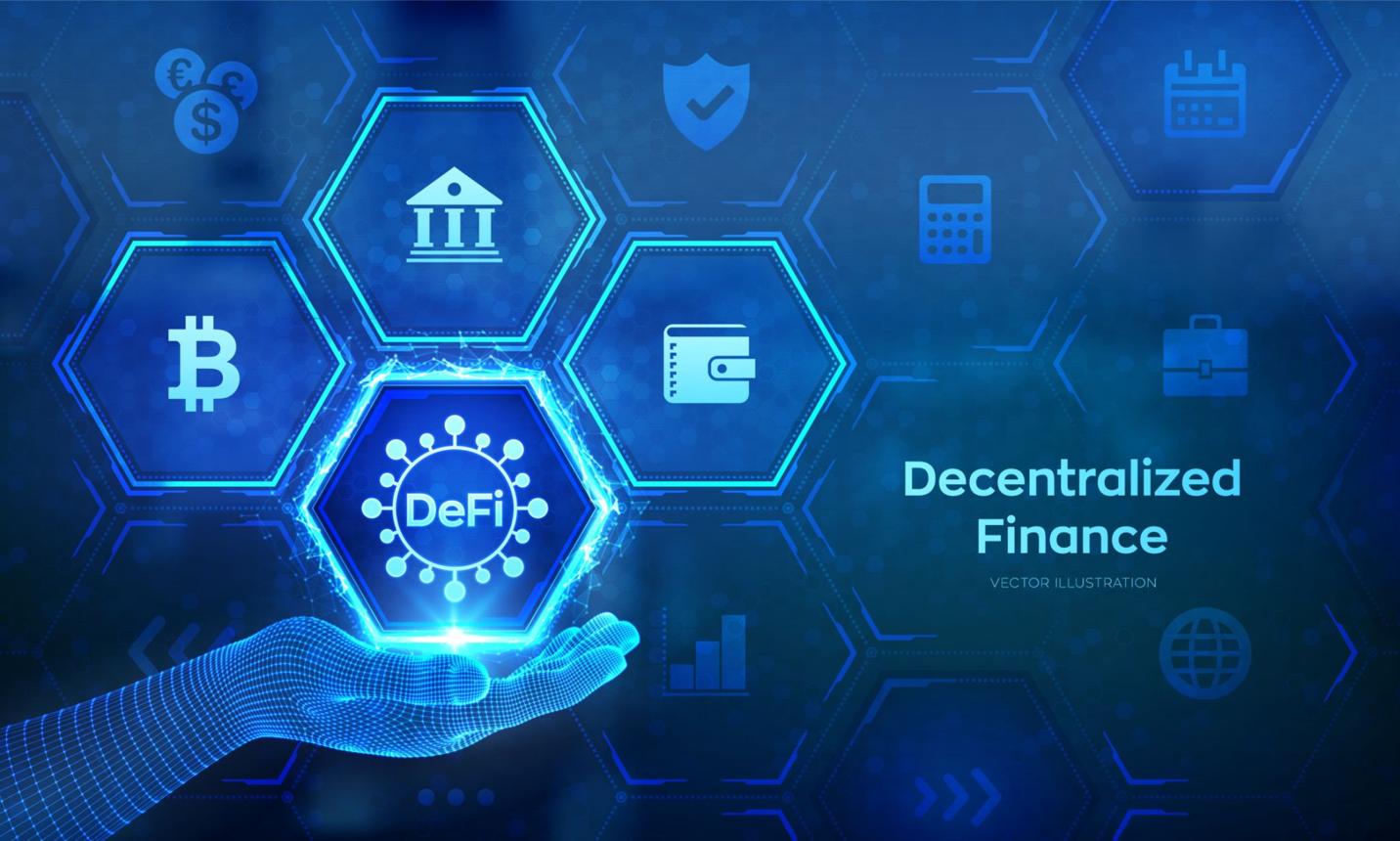
Decentralized Finance, commonly called DeFi, is a blockchain-based financial system that allows people to access financial services without traditional banks or intermediaries.
Built mainly on blockchain networks like Ethereum, DeFi uses smart contracts to automate lending, borrowing, trading, investing, and payments.
DeFi became one of the biggest innovations in cryptocurrency because it introduced the idea of an open, global, internet-based financial system.
DeFi stands for Decentralized Finance.
It refers to financial applications that run on blockchain technology instead of traditional financial institutions.
Through DeFi, users can:
Trade cryptocurrencies
Borrow and lend money
Earn interest
Stake digital assets
Access global financial services
All of this happens through decentralized software systems rather than banks.
DeFi platforms use smart contracts.
Smart contracts are self-executing blockchain programs that automatically perform transactions when conditions are met.
Instead of a bank approving actions:
The blockchain handles verification
Smart contracts execute transactions
Users control their own wallets and assets
This creates a peer-to-peer financial system.
Ethereum became the foundation of most DeFi applications because it supports programmable smart contracts.
Ethereum enabled developers to create:
Decentralized exchanges
Lending protocols
Stablecoins
Yield farming systems
Blockchain investment platforms
This rapidly expanded the DeFi ecosystem.
DEXs allow users to trade crypto directly without centralized companies.
Examples:
Uniswap Labs
PancakeSwap
Users can lend crypto to earn interest or borrow assets using collateral.
Examples:
Aave
Compound Labs
Stablecoins are important in DeFi because they reduce price volatility.
Examples:
Tether
USD Coin
DeFi attracted millions of users because it offers:
Users control their own funds.
Anyone with internet access can participate.
Transactions happen directly on blockchain networks.
Developers rapidly create new financial products.
Users can earn rewards through staking and liquidity providing.
| Traditional Banking | DeFi |
|---|---|
| Controlled by institutions | Decentralized systems |
| Requires intermediaries | Peer-to-peer smart contracts |
| Limited operating hours | 24/7 global access |
| Geographic restrictions | Worldwide accessibility |
| Slower settlements | Fast blockchain transactions |
DeFi aims to create a more open financial system than traditional banking.
Despite its innovation, DeFi carries major risks.
Coding vulnerabilities can lead to stolen funds.
Cryptocurrency prices can swing dramatically.
Some projects are fraudulent.
Governments continue developing crypto laws.
DeFi platforms can be difficult for beginners.
Because transactions are decentralized, mistakes can sometimes be irreversible.
DeFi and Non-Fungible Token ecosystems are closely connected.
NFTs can be:
Used as collateral
Traded on DeFi marketplaces
Integrated into gaming economies
This connection expanded blockchain-based digital ownership systems.
Future DeFi developments may include:
AI-powered financial systems
Tokenized real-world assets
Decentralized banking services
Cross-border payments
Blockchain insurance systems
Web3 financial ecosystems
Many experts believe DeFi could strongly influence the future of global finance.
Decentralized Finance represents one of the boldest attempts to rebuild financial systems using blockchain technology.
By removing intermediaries and enabling peer-to-peer financial services, DeFi introduced new possibilities for lending, investing, trading, and digital ownership.
Although risks and regulation remain major challenges, DeFi continues evolving rapidly and remains one of the most important innovations in the cryptocurrency industry.