Decentralized Finance (DeFi) – Transforming Traditional Banking Through Blockchain and Smart Contract Technology
Apr 20, 2026
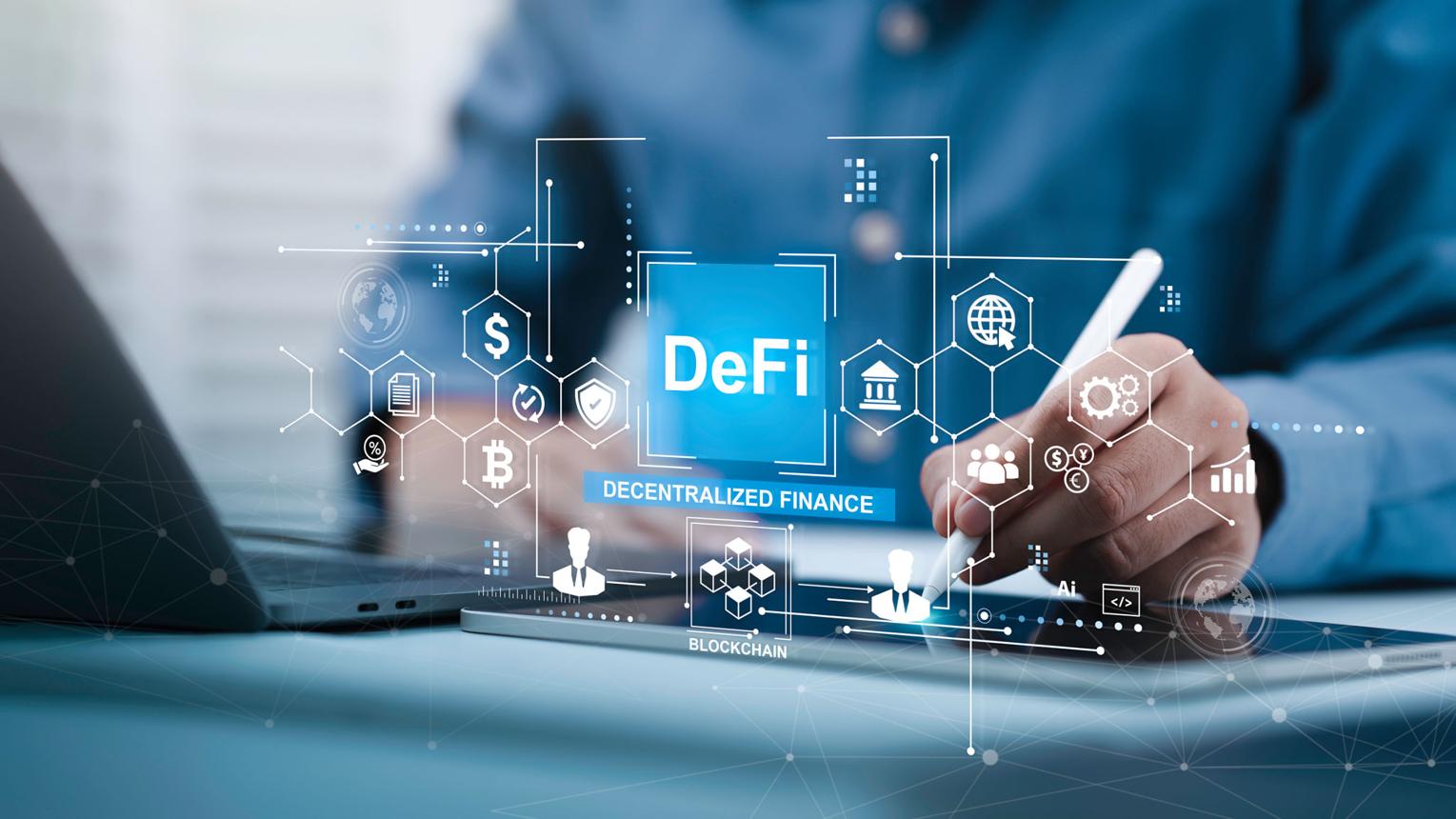
Decentralized Finance, commonly known as DeFi, is one of the fastest-growing sectors in the cryptocurrency and blockchain industry. DeFi aims to recreate traditional financial services — such as lending, borrowing, trading, and investing — without relying on banks or centralized institutions.
Built mainly on blockchain platforms like Ethereum, DeFi allows users to interact directly with financial applications through smart contracts. This technology has created a new financial ecosystem that operates globally, transparently, and continuously without traditional intermediaries.
DeFi refers to decentralized financial applications powered by blockchain technology.
Unlike traditional banks, DeFi platforms operate using smart contracts — automated programs that execute transactions when certain conditions are met.
DeFi services can include:
Lending and borrowing
Cryptocurrency trading
Yield farming
Staking
Insurance services
Digital asset management
Because these systems operate on public blockchains, users maintain greater control over their assets.
DeFi platforms use blockchain networks and smart contracts to automate financial activities.
Instead of opening a bank account, users connect cryptocurrency wallets to decentralized applications (dApps). These platforms can then provide financial services directly without approval from centralized institutions.
Most DeFi protocols operate on blockchain networks such as:
Ethereum
Solana
Avalanche
BNB
Transactions are recorded transparently on the blockchain, increasing visibility and reducing reliance on intermediaries.
DeFi has introduced many innovative financial services, including:
Users can trade cryptocurrencies directly without centralized exchanges.
Investors can lend digital assets and earn interest.
Users provide liquidity to platforms in exchange for rewards.
Cryptocurrency holders lock assets to help secure blockchain networks and receive returns.
Stablecoins help reduce price volatility within decentralized ecosystems.
DeFi offers several potential advantages over traditional finance:
Open global access
Reduced transaction costs
Faster transactions
Greater financial transparency
User control over funds
Continuous 24/7 operation
Many supporters believe DeFi could improve financial inclusion for people without access to traditional banking systems.
Despite its innovation, DeFi also carries significant risks.
Some major concerns include:
Smart contract bugs and hacks
Regulatory uncertainty
High market volatility
Scams and fraudulent projects
Liquidity risks
Complex user interfaces
Because DeFi operates in a rapidly evolving industry, regulations and security standards are still developing worldwide.
Many experts believe DeFi could reshape global finance in the coming decades.
Potential future developments include:
Decentralized banking systems
Blockchain-based investments
Tokenized real-world assets
AI-powered financial services
Cross-border digital payments
Integration with Web3 applications
As blockchain technology evolves, DeFi may continue expanding into mainstream financial systems.
Decentralized Finance represents one of the most important innovations in modern digital finance. By removing traditional intermediaries and using blockchain-based smart contracts, DeFi is creating new opportunities for financial services worldwide.
While the industry still faces challenges related to regulation, security, and volatility, DeFi continues attracting developers, investors, and businesses eager to build the next generation of financial technology.