Altcoins – Exploring the World of Cryptocurrencies Beyond Bitcoin and Their Role in the Future of Digital Finance
Apr 20, 2026
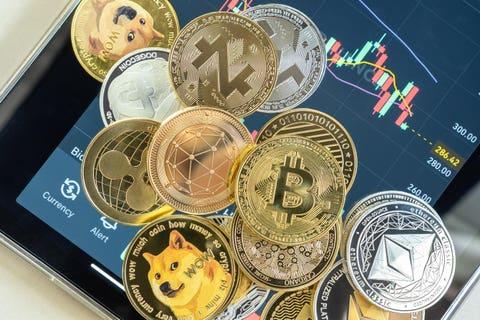
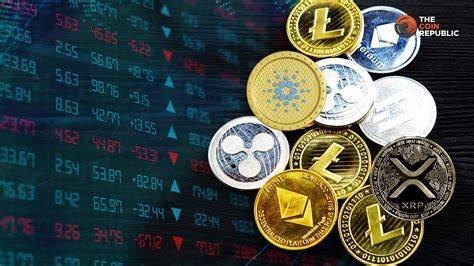
Altcoins are all cryptocurrencies other than Bitcoin. The word “altcoin” combines “alternative” and “coin,” referring to digital currencies created after Bitcoin introduced blockchain technology to the world.
Over the years, altcoins evolved into a massive ecosystem covering decentralized finance, smart contracts, gaming, NFTs, artificial intelligence, payments, and Web3 applications.
Today, thousands of altcoins exist, each designed for different purposes and technologies.
Altcoins are cryptocurrencies built to improve, expand, or provide alternatives to Bitcoin.
Some focus on:
Faster transactions
Lower fees
Smart contracts
Privacy
Decentralized apps
Financial services
Gaming and metaverse systems
While Bitcoin mainly acts as digital money or “digital gold,” many altcoins provide broader functionality.
After Bitcoin became successful, developers realized blockchain technology could support much more than payments.
This led to the creation of alternative cryptocurrencies with different goals and features.
Reasons for creating altcoins included:
Improving scalability
Adding programmability
Increasing transaction speed
Supporting decentralized applications
Expanding blockchain use cases
This innovation helped grow the cryptocurrency industry rapidly.
These blockchains support decentralized applications and smart contracts.
Examples:
Ethereum
Solana
Cardano
Stablecoins are designed to maintain stable value, often tied to currencies like the U.S. dollar.
Examples:
Tether
USD Coin
These cryptocurrencies became popular through internet culture and online communities.
Examples:
Dogecoin
Shiba Inu
Privacy-focused altcoins emphasize anonymous transactions.
Examples:
Monero
Zcash
Ethereum played a huge role in altcoin growth because it allowed developers to create tokens and decentralized applications on its blockchain.
This led to:
DeFi projects
NFT ecosystems
Blockchain gaming
DAO systems
Web3 applications
Ethereum became one of the main foundations of the altcoin industry.
Investors are attracted to altcoins for several reasons:
Some altcoins experience massive price increases.
Many projects introduce new blockchain technologies.
Altcoins power decentralized financial systems.
Altcoins are central to blockchain internet projects.
Investors use altcoins to diversify crypto portfolios.
Altcoins can also be extremely risky.
Prices can rise and crash rapidly.
Some projects lack real utility or legitimacy.
Governments continue tightening crypto regulations.
Smart contract bugs and hacks remain common.
Thousands of projects compete for attention and adoption.
Many altcoins disappear over time due to lack of adoption.
| Bitcoin | Altcoins |
|---|---|
| First cryptocurrency | Alternative cryptocurrencies |
| Mainly digital store of value | Wide variety of functions |
| More established reputation | Higher innovation and risk |
| Limited supply focus | Multiple blockchain utilities |
| Lower relative volatility | Often more volatile |
Bitcoin remains dominant, but altcoins drive much of crypto innovation.
Future trends in altcoins may include:
AI-powered blockchain systems
Web3 infrastructure
Tokenized real-world assets
Gaming economies
Decentralized social media
Blockchain payment systems
As blockchain technology evolves, new altcoins continue entering the market with advanced use cases.
Altcoins transformed cryptocurrency from a single digital currency into a massive ecosystem of decentralized technology and innovation.
From DeFi and NFTs to gaming and smart contracts, altcoins continue reshaping finance, internet systems, and digital ownership.
Although the market remains highly volatile and risky, altcoins remain one of the most dynamic sectors in modern technology and investing.